Concerned (and Hopeful) About the Mental Health Crisis in Kids & Teens

Jason Anderson, LMSW


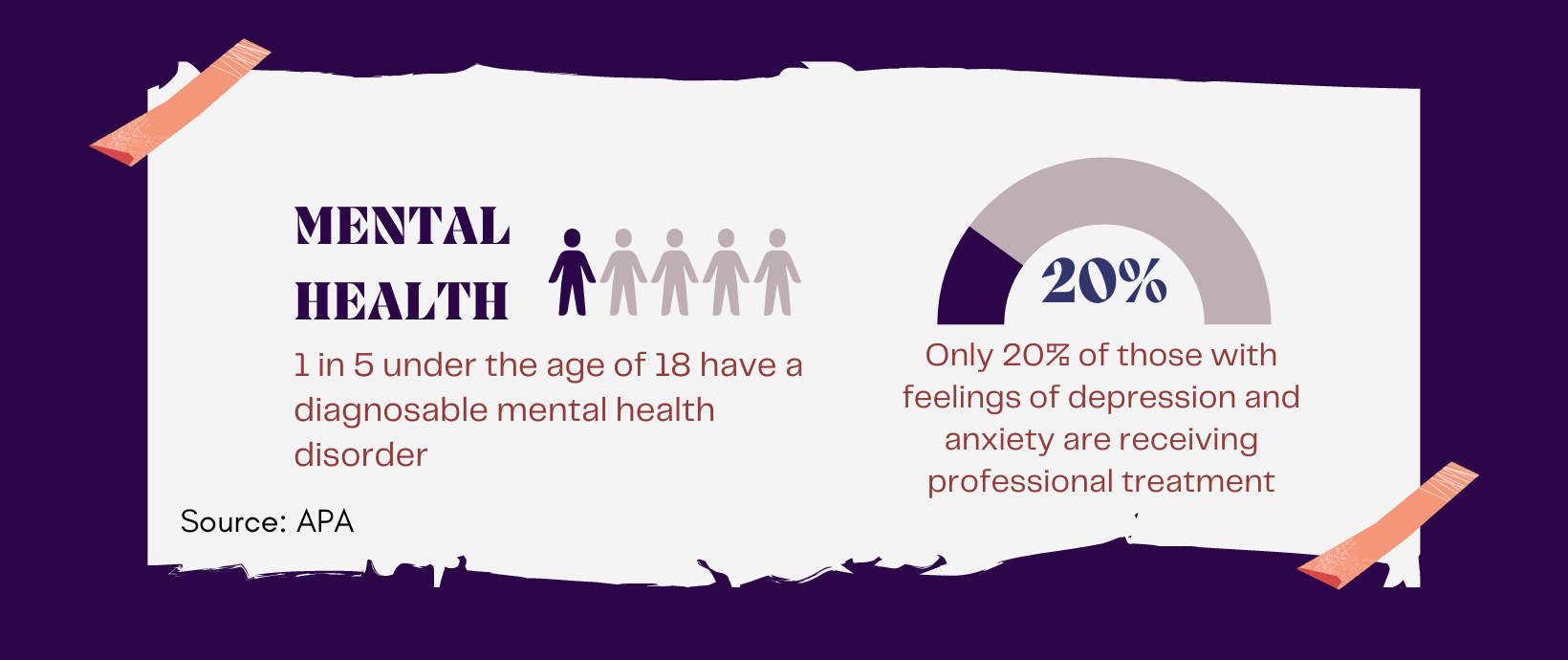
More and more data is surfacing about the mental health crisis in our children and teens. A recent statistic from the American Psychological Association shows that 1 in 5 under the age of 18 have a diagnosable mental health disorder, and only 20% of these children are receiving professional help or treatment for their feelings of depression and anxiety.
We are all mostly aware of some of the recent factors that contribute to this rise. Covid-19 protocols created periods of isolation and disruption from routines and school services. Socially and politically, it feels like our families and communities have never been so fractured and full of distrust. Social media has now been researched long enough to show direct correlation between screen time and anxiety in teens.


There is another factor, however, that I have been following since I obtained my Masters in Social Work in 2011. It’s an idea called “internal locus of control” and it’s absence is one of the leading factors associated with depression and anxiety in children (and adults). The idea contrasts the freedom one experiences to direct their own life (internal), versus the external expectations, busyness, stress, and social demands that dictate choices from the outside.


Researchers at the University of Michigan found the time kids spent at school has increased by more than 18%, and time spent on homework has increased 145% since the 1980’s. This study doesn’t even include the time spent at structured practices, rehearsals, clubs or games. We have become so performance driven that our kids have less and less time for “free play”.


In our performance driven culture in which we find worth and value in what we produce or achieve, kids are losing the sense that they have freedom to be curious and explore. Less time to play, and less motivation to play outside.  A Dutch study found that 30% of kids play freely outside only once a week or less.  Another study in the US shows that 80% of kids today feel less “in control” of their lives than kids from my era. This disparity provides content for interesting memes about growing up in the 70s and 80s, but it is also having very real consequences for the mental health of our kids today.


Well-meaning parents are giving their kids more parenting time, hoping to give them a competitive advantage or keep them safer. Parents today spend 150% more time parenting than our parents did in the 1980’s. The unintended consequence? Kids feel less independent, less in control of their own lives, less capable, and therefore experience a diminishing “internal locus of control”. 


For all of our efforts to give our kids a better life, we are forgetting that one of their primary developmental tasks is to achieve a belief in their own self-efficacy. Kids need to face challenges and risks. Kids need to face boredom. Kids need to invent some of their own games, follow some new paths from day to day, and discover the real world around them. In these choices and discoveries they will form one of the healthiest cognitions for any of us, “I can do this”.


So for all of the bad news, where is the hope?


The hope is that deep within their DNA, kids are still humans that want a chance to direct their own lives! Anyone who has parented a toddler can remember that raw strength of will and determination. I recently asked my 8th grader “what is the fastest land mammal?”. He said “cheetah”. But I corrected him and said , “Nope, a toddler who was just asked ‘what do you have in your mouth?!’”


Kids are hardwired to manage some risk and develop strengths in the face of challenges. An encouraging study from Scandinavia found that elementary kids who were exposed to more free play, including slightly higher risk levels, were less likely to encounter injury or distress. Believe it or not, they navigated the more “dangerous” playground equipment with less supervision and developed their own skills for maintaining both their physical safety and mental health. They built an “internal locus of control” for directing their own behavior in a wide open world!


In my next blog, I’ll dive further into how kids, teens specifically, can strengthen an “internal locus of control” and build resilience against depression and anxiety.


Jason Anderson, LMSW is a therapist at Restore Therapy Collective. Jason’s work stems from a desire to see people overcome personal barriers, form authentic relationships, and appreciate the beauty around them. Jason also has a deep love for using wilderness travel adventures to bring people to new discoveries within themselves and foster a greater love for the natural world. 


Restore Therapy Collective

By Jonah Maichele April 20, 2026
As a runner, I’ve learned that progress rarely comes from a single run. Rather, it comes from doing the reps time and time again. Sometimes, it means long miles when my legs feel strong. Other times, it is dragging myself out the door when it’s still pitch black outside, and the temperature is well below freezing. Of course there have been plenty of mornings when the last thing I wanted to do was run (And there still are days I don’t want to). But over time, the runs that felt difficult or like a chore, slowly became part of my routine. Changing behavior and creating a routine often works the same way. Many people come into counseling hoping for a breakthrough moment and/or quick fix, where everything suddenly makes sense and life feels easier. These moments can happen, but lasting change more often comes from practicing new ways of thinking, responding, and caring for yourself over and over again. In other words, it comes from doing the reps. In running, a rep might be a mile repeat or a long training run. In mental health, the reps look different. They might be things like pausing before reacting in a difficult conversation, challenging a negative thought instead of automatically believing it, or practicing a coping skill when anxiety starts to rise. At first, these reps can feel awkward and uncomfortable. Just like starting a new training plan, the effort can feel heavy in the beginning. Our brains adapt in much the same way our bodies do. With each rep, new patterns start to take hold. That coping skill becomes more natural. The pause before reacting becomes easier. That difficult conversation becomes more manageable. Here are some reps you can give a try Drink a full glass of water when you wake up in the morning. Take five minutes before bed to simply focus on your breathing. Step outside for a short walk, even if it’s just around the block. Pause and take three slow breaths when you notice stress building. Write down one thing you’re grateful for at the end of the day. Remember! The goal isn’t perfection. It’s getting in the reps. Start with something small, even if it feels too easy. Some days the reps will feel easier than others. Some days they’ll feel heavy. Change tends to come from continuing to show up anyway. And eventually, the things that once felt difficult start to feel normal. That’s when real change begins to take hold.  Jonah Maichele is a counseling intern at Restore Therapy Collective. In his free time, Jonah enjoys running, playing guitar, and hammocking at the beach. His favorite foods include sushi, orange chicken, and his grandma’s specialty gnocchis.
By Morgan Peterson, LLMFT, LLPC February 25, 2026
I so often hear things like, “I know I shouldn’t get angry, but I do,” or, “I get so anxious, and I should just let it go.” It’s a common refrain of things that should be done and ways we should behave. We talk about emotions as something to control rather than work alongside, but what would happen if we learned to work with our emotions rather than against them? Think of our emotions as a horse—they’re instinctual, reactive, powerful, and often rooted in survival mechanisms. Just like a horse, they can be strong and seemingly unpredictable. Now think of the rational part of ourselves as the rider of the horse; this is the part of us that plans, is logical, and tries to stay in control to lead us in deliberate direction. The goal isn’t to “break” the horse and give the rider total control, and the goal is also not to let the horse run wild. The goal is to build a relationship between the two. When the horse and rider work together in harmony, the journey is smooth. The horse provides energy and motivation while the rider offers direction and guidance. If the horse is too in charge, it might bolt with fear, anger, or desire, and this can lead us off trail. If the rider is too dominating, they may ignore signals from the horse until it erupts, or the horse is stifled to the point of low energy and lack of motivation. Therapeutic work often involves helping the rider understand and work with the horse by learning how to notice, respond to, and gently guide it. The goal isn’t control, but connection. It’s about building relationship between emotions and our rational selves to encourage understanding, respect, and resiliency within ourselves. We can listen to our emotions without being overwhelmed by them, and we can use our rational mind without it becoming a harsh inner-critic. Emotional regulation isn’t about silencing emotions, but learning to ride with them. Morgan Peterson, LLMFT, LLPC, is a therapist at Restore Therapy Collective. Morgan’s passion is helping people improve their relationships—with others and with themselves. When not in session, you can find her gardening, knitting, reading, or doing other “grandma” hobbies.
By Melanie Freeland, LLPC November 3, 2025
There aren’t many more distressing ideas for parents than the thought of their child in emotional pain. Parents contact me often in a panic because they believe their child is struggling, and they feel as if they, as parents, are failing. That may be why it’s often surprising that the first direct question I ask at a parent consultation is, “How are YOU doing?” Children Don’t Exist in Isolation What brings a child to therapy is often a reflection of the distress the entire family system is experiencing. From the moment a child is born, their nervous system is shaped by things as seemingly minute as tone of voice and facial expressions. Stress experienced by parents and other caregivers does not go unnoticed. The difference with children is that they, developmentally, do not have the capacity to see themselves as separate from a caregiver’s stress, the boundaries haven’t been formed yet. Something as simple as a string of bad days at work for a caregiver can be interpreted by a child as a failing on their part. In other words, a child’s mental health is not just about their inner world, but about the “relational web” they are a part of every day. This ABSOLUTELY does not mean caregivers are ‘at fault’ for their child’s distress. It does mean that engaging in the therapy process and growing skills to model within the family system can be the biggest contributor to long-term therapeutic success. The Family as Co-Therapist; What does it mean to engage in the therapy process? Child therapists have different views on what constitutes best practice for parental involvement in therapy. Filial play therapists, who work with the entire family system (parents and kids at the same time) through play, have parents attend every session. Child-centered play therapists meet with parents separately on a regular schedule. Other child therapists may meet with parents for a few minutes during each session. There is no one correct model, but there are a few things to expect while working with your child’s therapist. Learning new skills : Identifying areas of difficulty (such as co-regulation, routines, or limit setting) and trying new strategies that work for the WHOLE family. Becoming situationally reflective, not self derogatory : Working toward a mindset of “What is my child communicating to me right now?” instead of “What am I doing wrong?” Growing in confidence and self-compassion : Internalizing the understanding that your job as a parent is not to solve every problem, but to help yourself remain regulated so that you can be with your child as they learn about the world around them. A Collaborative Journey The end goal of therapy for a child may not be for the child to be able to perfectly manage all situations. In fact, I would go so far as to say that SHOULDN’T be the end goal. Instead, working with a therapist to uncover what a child is bringing to the family system and finding ways to address the whole system can lead to faster and longer lasting therapeutic change. I challenge all parents to think of therapy for their child as a collaborative journey for the whole family, and find positive change for themselves in the journey as well. Melanie Freeland is a therapist at Restore Therapy Collective specializing in relational trauma and attachment. When she’s not with clients, she’s likely reading, baking, or spending time with her family. To schedule an appointment with Melanie, please send a secure message through our contact form .
Show More